How Is Progress Measured in ABA Therapy? A Parent's Guide

You can tell whether ABA therapy is helping by comparing your child's skills with their starting point over time. ABA therapy progress tracking combines individualized goals, observations, and data, rather than one score or a promised outcome.
Meaningful progress should support your child's well-being and everyday life. These are general educational principles; your child's clinician applies them to their individual plan. Start with what the team measures and why.
Key Takeaways
Progress compares current skills with a documented starting baseline.
Goals should reflect your child's needs, communication preferences, and everyday priorities.
Different measurement methods capture aspects of learning, including the support your child needs.
The analyst's review and caregiver observations help guide treatment changes.
Meaningful progress includes using skills outside sessions and retaining them over time.
How Does ABA Therapy Progress Tracking Measure Change?
ABA therapy progress tracking compares observable skills or behaviors with baseline performance. Standardized scores can add information, but goal-specific data show what changes during relevant activities.
Baseline assessments show where learning starts
A Board Certified Behavior Analyst (BCBA) may combine direct observation, caregiver interviews, records, and assessment tools.
Baseline data records your child's starting performance, including where and under what conditions the team observes. Recording observation time, opportunities, and available help makes later comparisons more meaningful.
Individualized goals make progress easier to recognize
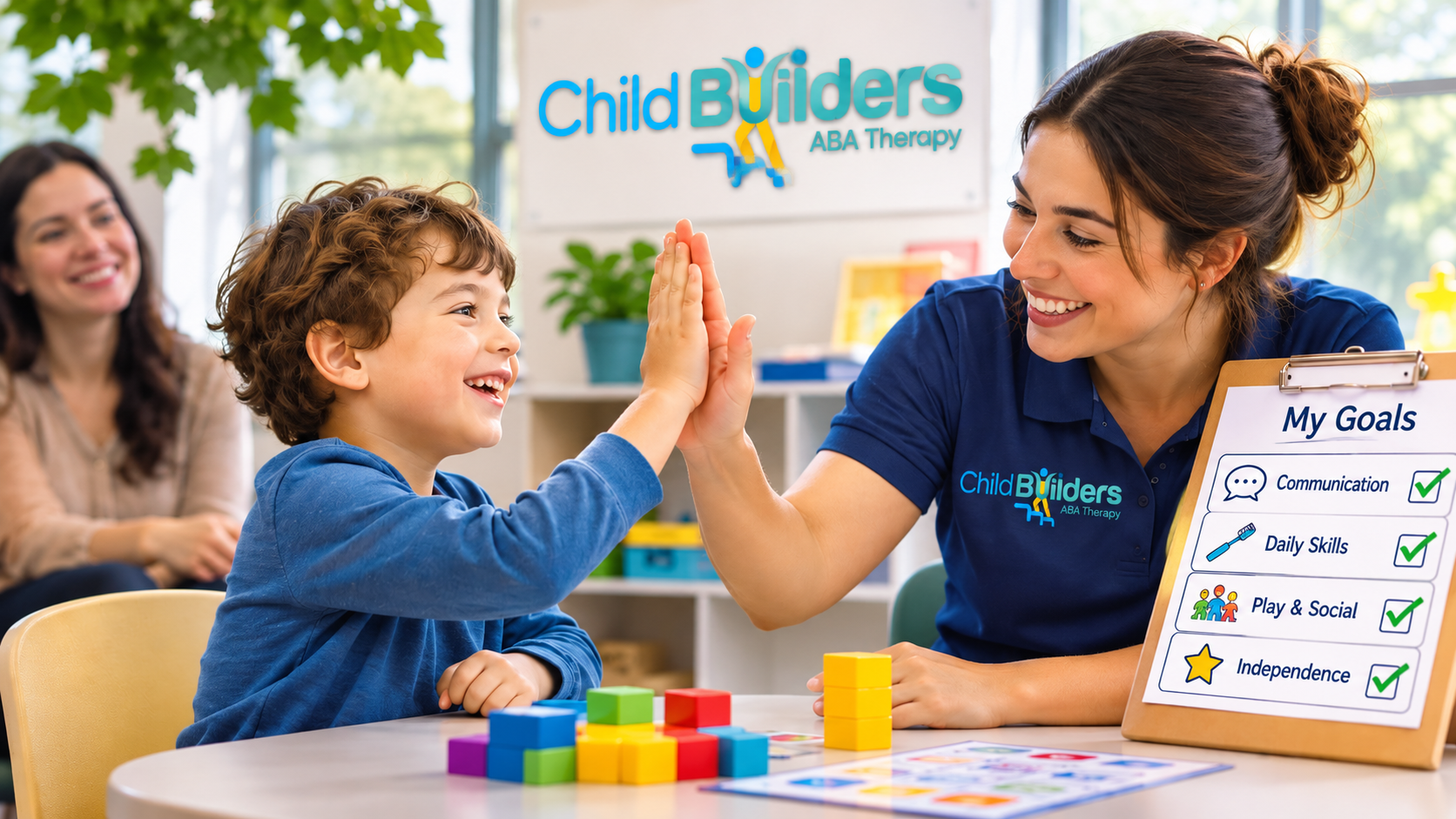
Broad priorities become observable ABA therapy goals. Each goal defines the response, conditions, allowed support, and measurement rule. SMART criteria can help make goals specific and measurable, but goals still need to fit your child's needs and daily life.
For example, a break-request goal could track whether your child asks during a routine using speech, a gesture, or their communication device. The team records opportunities and prompting as it measures skill acquisition. Depending on the child, the team may use positive reinforcement, such as providing the requested break, and shaping, which reinforces successive steps toward an independent request. Our approach to choosing individualized therapy goals starts with needs that matter in daily life.
Which ABA Data Collection Methods Fit Different Goals?
ABA therapy data collection should capture the relevant part of a skill consistently. Clinicians choose a consistent measure that fits the goal and observation conditions.
Counts, duration, latency, and interval recording answer different questions
Frequency recording counts how often something happens; rate expresses that count per unit of time. Duration recording measures how long it lasts, while latency recording measures the time between a cue and the response.
Interval recording or time sampling records whether behavior occurs during defined periods or at selected moments. Because sampling doesn't capture every occurrence, clinicians must consider its limits when interpreting results.
ABC data records what happens before a behavior (the antecedent), the behavior itself, and what follows (the consequence). This context can help the team interpret behavior. Comparing observers' records can help check interobserver reliability, or whether they apply a measure consistently.
Task analysis can show progress through a multistep skill
Task analysis divides a routine, such as handwashing, into observable steps. The team records which steps your child completes and what assistance they need.
This can reveal growing independence within a routine, even before your child completes the whole sequence without help.
How Does the BCBA Turn Progress Data Into Next Steps?
The BCBA uses progress monitoring and data collection to compare ongoing results with baseline and goals. The BACB Ethics Code calls for continual evaluation and corrective action when desired outcomes aren't occurring. The analyst uses data analysis to guide data-driven decision making and evaluate therapy effectiveness.
Mastery criteria define what meeting a goal means
A mastery criterion states in advance what evidence counts as meeting a goal. It includes relevant conditions and support levels. The criterion should fit the particular skill and child.
Generalization and maintenance show whether skills last beyond sessions
Generalization means using a skill with different people, materials, or settings. Maintenance means continuing to use it over time.
Therefore, checking a request during family routines provides different information than recording it only with the teaching therapist.
BCBA oversight includes reviewing both outcomes and implementation
The analyst reviews treatment integrity, or whether staff follow the teaching plan. An RBT's implementation can be compared with the written plan, since inconsistent delivery can affect results.
Caregiver input and coordination with school teams or other providers add context. Based on that review, the analyst may continue, adjust, or replace a strategy.
How Can Parents Read ABA Therapy Progress Reports?
Identify what each number means
ABA therapy progress reports should identify the target, baseline, measurement method, trend, and current status. Visual aids can make data analysis easier to follow, and the report should explain any treatment-plan changes.
"Prompted" means someone provided help. "Independent" means the child responded without that specified assistance. Separating these responses makes changes in support needs visible.
Questions that make progress conversations clearer
Ask: "What exactly are we measuring, and what did baseline show?" Then discuss why the team chose the method and what counts as mastery.
Also ask whether the team checks the skill with other people and in other settings. Share your observations from home as part of parental involvement in the review, and ask, "What will we review or adjust next?" Our caregiver consultation and training supports these conversations.
Frequently Asked Questions
How often should parents receive progress updates?
Update schedules vary by provider and treatment plan. Agree on when you'll review data together and how you can raise concerns between formal updates.
Does a slow change in the data mean therapy is not working?
One point or short period doesn't establish the full trend. Discuss context, changes in support, and possible adjustments with the analyst before drawing conclusions about the plan.
Can parents help collect useful progress information?
Yes. Share brief observations about communication and skills during home or community routines. Include what happened and what help your child needed, then discuss how those observations fit the team's data.
Why might a progress report use graphs?
Graphs and charts are visual aids that can help you spot patterns across observations. Check what each axis and data point represents, since the display may show counts, time, percentages, or another measure.
Keep Progress Connected to Everyday Life
Meaningful ABA therapy progress tracking focuses on useful, individualized skills that support your child's well-being. Everyday use and the support your child needs matter alongside the numbers.
Review reports with the analyst and share what you notice outside sessions. Ask how those findings will guide the next treatment decision so the plan stays connected to your child's needs.