Autism and Anxiety: What Every Parent Needs to Know

When your child with autism is struggling, it is not always easy to know why.
Is it a sensory overload? A communication barrier? A rigid routine that has been disrupted? Or could it be something deeper — an undercurrent of anxiety that is shaping everything from meltdowns to school refusal to sleep difficulties?
For many children with ASD, anxiety is not a separate problem. It is a constant backdrop. And when it goes unrecognized, it can make every other challenge harder to address.
How Common Is Anxiety in Children With Autism?
Research indicates that the prevalence of at least one anxiety disorder among children with ASD is approximately 40%, with specific phobia, obsessive-compulsive disorder (OCD), and social anxiety disorder being the most common types. Overall prevalence estimates across studies range from 22% to as high as 84%.
Anxiety is considered the most common co-occurring mental health condition in children with autism spectrum disorder, and anxiety symptoms significantly interfere with a child’s ability to participate in school and community settings.
If your child with autism seems to be struggling more than their diagnosis alone would explain, anxiety may be playing a significant role.
Why Are Children With Autism More Vulnerable to Anxiety?
A World That Feels Unpredictable
Children with autism often rely on sameness, routine, and predictability to feel safe. When unexpected events occur — a change in schedule, a substitute teacher, a fire drill — the nervous system can respond with a level of alarm that feels disproportionate to others but is entirely genuine for the child experiencing it. This is not a behavioral choice or a lack of flexibility. For many autistic children, unpredictability creates real physiological stress.
Sensory Overload
Many children with ASD experience the environment with heightened sensory sensitivity. Crowded, noisy, or visually busy environments can become genuinely overwhelming — triggering a stress response that, when repeated frequently enough, can develop into chronic anxiety around those environments.
Communication Barriers
When a child struggles to express their internal experience — their fears, discomfort, or distress — anxiety can build without any outlet. The inability to communicate “I am scared” or “this hurts” is itself a source of significant stress.
Social Demands
Social anxiety disorder is one of the most common anxiety types in children with ASD. Navigating social situations — reading facial expressions, understanding unspoken rules, trying to fit in — requires enormous effort and generates significant anxiety for many autistic children, particularly in school settings.
What Does Anxiety Look Like in Children With Autism?
Anxiety in autistic children does not always look like anxiety. Children with ASD often do not display age-typical symptoms of anxiety — which means identification should involve multiple informants and modalities.
Rather than expressing worry verbally, an anxious autistic child might show:
- Increased meltdowns or aggressive behavior
- Heightened rigidity around routines — refusing any variation
- Increased repetitive behaviors or stimming
- Physical complaints — stomachaches, headaches — with no clear medical cause
- Avoidance of specific places, activities, or people
- Sleep difficulties or refusal to separate from caregivers
- Emotional shutdowns or withdrawal
Many of these behaviors are easy to misread as stubbornness, defiance, or simply “ASD behavior.” Understanding that anxiety may be driving them changes how you respond — and what kind of support is actually helpful.
How Is Anxiety in Autism Assessed?
A thorough assessment should involve:
- Parent and caregiver input — you know your child’s baseline behavior better than anyone, and changes from that baseline are meaningful data
- Teacher and school observations — anxiety often shows up most clearly in school settings
- Direct observation by a qualified clinician — a BCBA or psychologist can observe behavioral patterns across contexts
- Review of medical factors — pain, gastrointestinal issues, medication side effects, and other factors can exacerbate or mimic anxiety symptoms
If you suspect your child is experiencing significant anxiety, raise it explicitly with their pediatrician and ABA team.
Evidence-Based Strategies for Managing Autism and Anxiety
Cognitive Behavioral Therapy (CBT) — Adapted for ASD
Over the past two decades, there has been growing empirical evidence for Cognitive Behavioral Therapy as an effective treatment for anxiety in children with ASD, with modified CBT now classified as an empirically supported treatment for this population.
For autistic children, CBT is typically modified to:
- Use concrete, visual, and structured formats
- Incorporate the child’s special interests to increase engagement
- Move at a pace that works for the individual child
- Include parent and caregiver involvement throughout
Behavioral Strategies Through ABA
Behavioral treatments for anxiety may be effective for children across functional levels, using techniques such as graduated exposure, reinforcement strategies, modeling, and prompting to help children approach feared situations with support.
At ChildBuilders ABA in Rhode Island, the team works with families to understand the behavioral and emotional patterns affecting their child — including anxiety — and builds individualized strategies to address them.
Predictability and Routine
One of the simplest and most effective anxiety-reducing strategies for autistic children is also one of the most accessible: structure and predictability. Practical tools include:
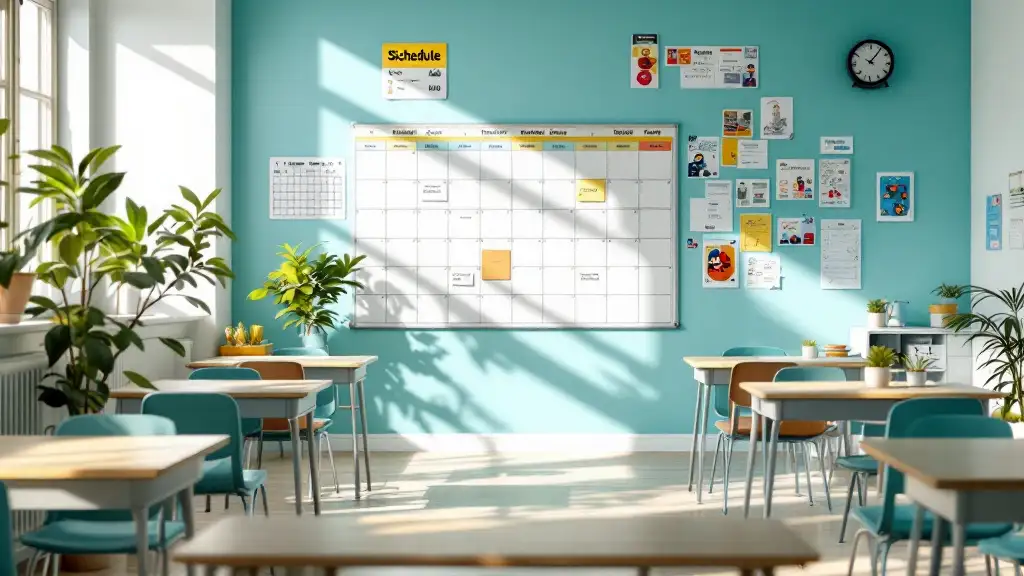
- Visual schedules — showing the sequence of the day or a specific transition
- First-then boards — “First we do X, then we do Y”
- Countdown timers — giving advance warning before transitions
- Advance preparation — talking through or role-playing unfamiliar situations before they happen
- Social stories — simple narratives that walk a child through a challenging situation and describe how to respond
Sensory Regulation
When sensory overload is a contributing factor, addressing the sensory environment is an important part of the solution. This might involve:
- Identifying and reducing specific sensory triggers in the home, school, or community
- Providing sensory tools that help regulate the nervous system — compression garments, noise-canceling headphones, fidget tools
- Building “sensory breaks” into the day before the child reaches a point of overwhelm
- Working with an occupational therapist to develop a sensory diet
Exercise and Physical Activity
Regular physical activity is one of the most reliably supported strategies for reducing anxiety across populations, and there is growing evidence this holds true for autistic children. Movement — particularly activities that involve deep pressure, coordination, or rhythmic patterns — can have a directly calming effect on the nervous system.
When to Consider Medication
For some children, behavioral strategies alone are not sufficient to manage significant anxiety. In these cases, medication — typically selective serotonin reuptake inhibitors (SSRIs) — may be considered in combination with behavioral interventions.
This is a decision to be made with your child’s pediatrician or psychiatrist, weighing the potential benefits against the risks for your specific child.
What Parents Can Do Right Now
- Notice patterns. When does your child’s anxiety seem highest? What precedes meltdowns or avoidance? Tracking these patterns helps you and your child’s support team understand what is driving the behavior.
- Reduce unnecessary unpredictability. The more warning and preparation you can give before transitions and changes, the better.
- Name emotions simply and calmly. Labeling the feeling helps your child understand their own internal experience over time.
- Avoid reinforcing avoidance. Work with your child’s team on gradual, supported exposure instead.
- Take care of yourself. Parenting an anxious child is exhausting. Your own stress levels affect your capacity to respond calmly. Find support for yourself — this is not a luxury, it is a necessity.
A Note on Compassion
An anxious child is not a difficult child. They are a child who is overwhelmed by a world that does not always make sense to them, trying their best with the tools they have.
Every behavior has a reason. When you approach your child’s anxiety with curiosity rather than frustration — asking “what is this telling me about what my child needs?” rather than “why are they doing this again?” — you shift from reacting to the behavior to addressing the cause.
Get Support From a Team That Understands
At ChildBuilders ABA, serving families across Rhode Island and Massachusetts, the team works to understand the full picture of your child’s experience — including anxiety — and builds individualized strategies that address behavior at its root.
Through ABA therapy, caregiver training, and collaborative care, ChildBuilders ABA partners with families to support children in building the skills, confidence, and coping strategies they need to thrive.
Apply for services or contact the ChildBuilders ABA team to start the conversation.























.jpg)